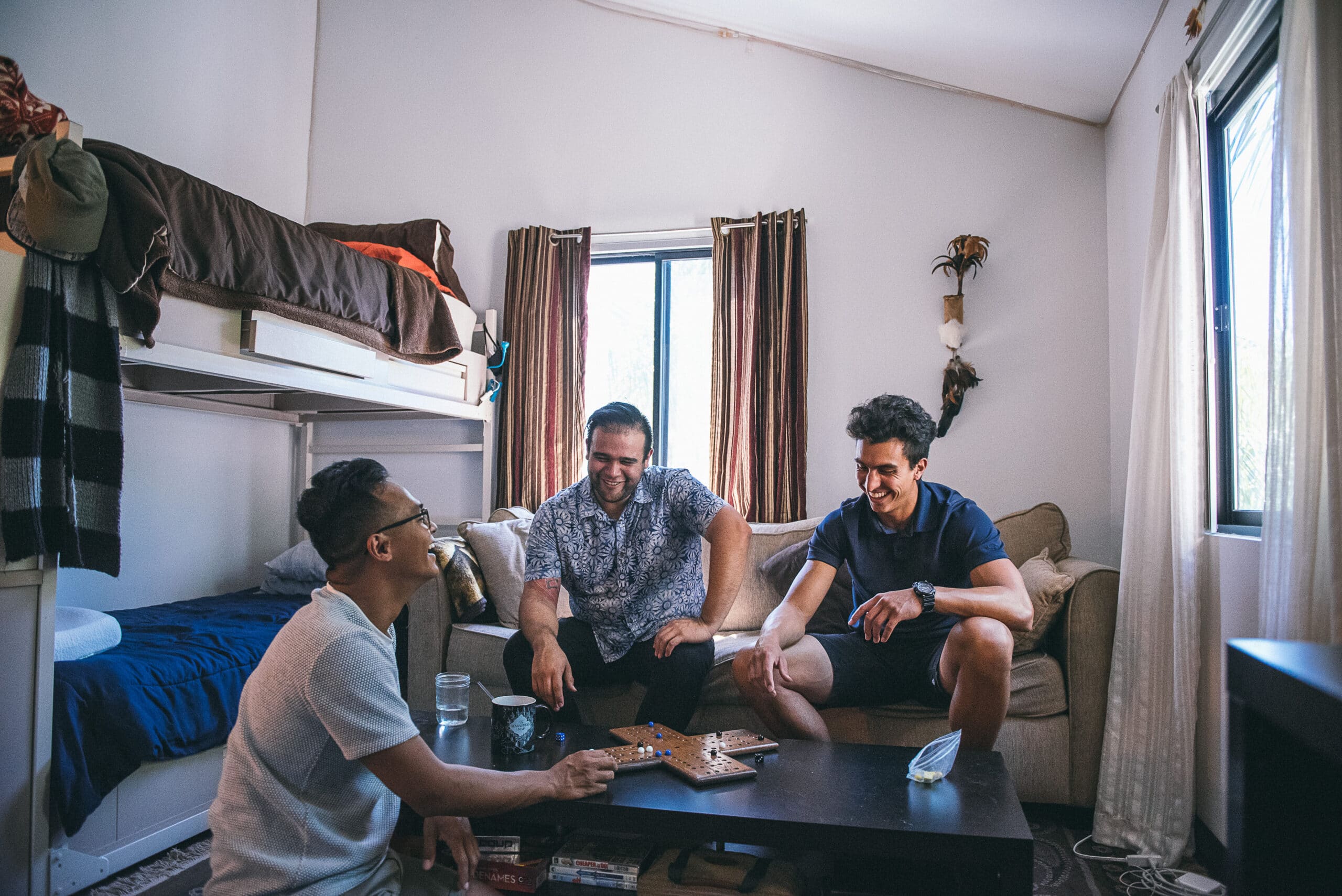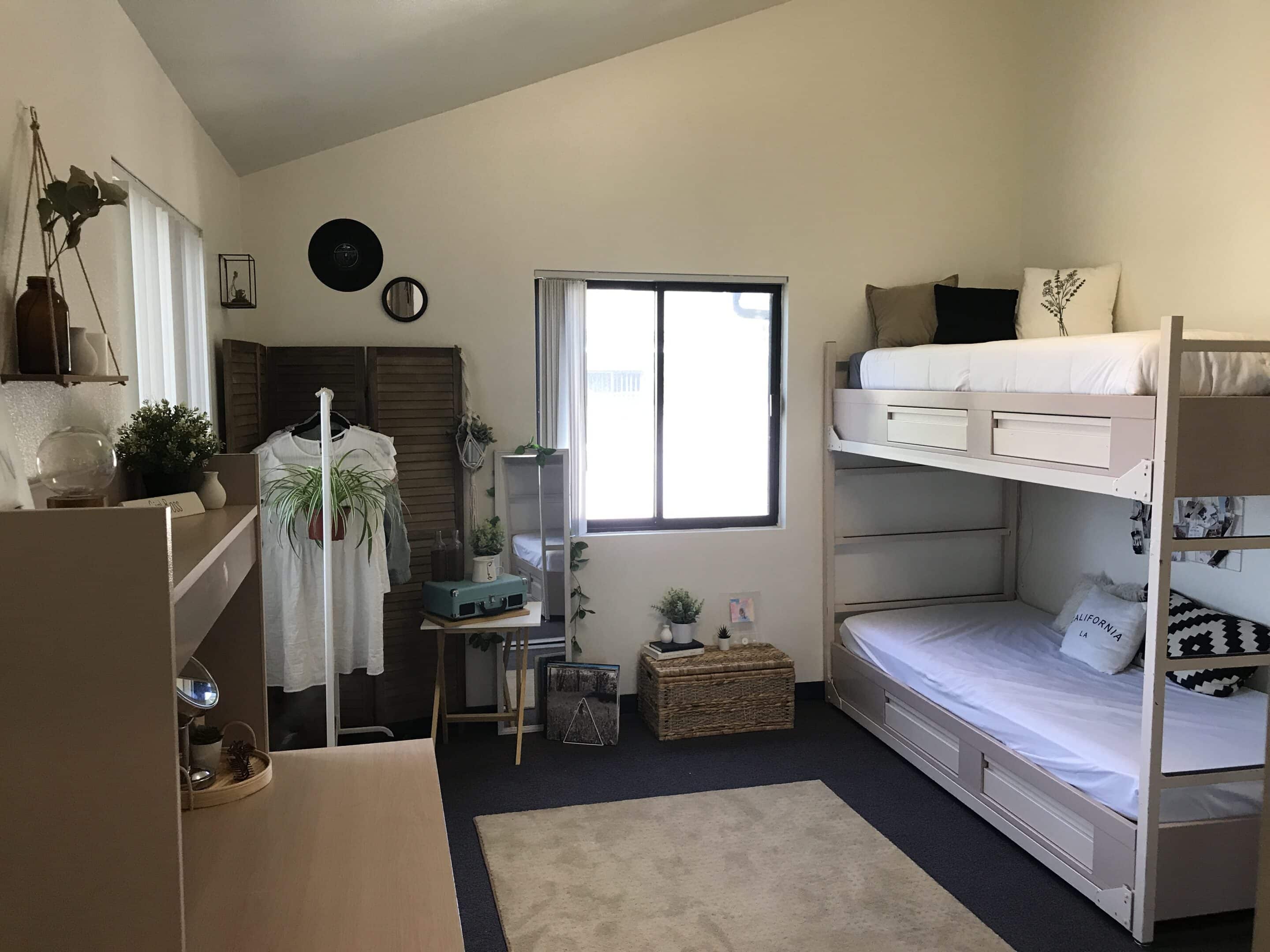
Living on campus is an experience! Each of the four residence halls house about 80 students. Each floor is staffed with a Resident Assistant who serves as a resource for their residents, addressing emergencies, enforcing policies, and coordinating activities. Some fun activities can range from Donut Man study breaks to prayer meetings and game nights where residents can get to know one another.
Meet the Team
The ResLife Team consists of:
Tasha Johnson (Resident Director)
Chantal Johnson (Resident Coordinator)
Female Resident Assistants:
Meagan McLaughlin
Maria Proli
Jamie Hensley
Kristin Bothel
Male Resident Assistants:
Richard McLaughlin
Tony Nichols
Jake McCracken
Jordan Fehlen
Newcomers to the residence halls get plenty of support. Sponsors live in quads with 5 or 6 freshmen and/or transfer students and serve as informal organizers, guides and advisers. All incoming students are assigned to single gender residence halls (all men or all women).
Clery Act 2012
Campus Security Report 2011
A Legislative History of the Clery Act
The Student Right to Know and Campus Security Act (Public Law 101–542) was signed into law by President Bush in 1990 and went into effect on Sept. 1, 1991. Title II of this act is known as the Crime Awareness and Campus Security Act of 1990. This act amends the Higher Education Act of 1965(HEA) by adding campus crime statistics and reporting provisions for postsecondary institutions. It requires the disclosure of crime statistics for the most recent three years, as well as disclosure of the institution’s current security policies. Institutions are also required to issue timely warnings when necessary. All public and private Title IV eligible institutions must comply with the requirements of this act which is enforced by the U. S. Department of Education (ED).
This law was amended when Congress enacted the Campus Sexual Assault Victim’s Bill of Rights as part of the Higher Education Amendments of 1992 {Public Law 102–325, Section 486(C)}, giving victims of sexual assault on campus certain basic rights. In addition, institutions are required to develop and distribute a policy statement concerning their campus sexual assault programs targeting the prevention of sex offenses. This statement must also address the procedures to be followed if a sex offense occurs.
The most recent version of this law was passed as part of the Higher Education Amendments Act of 1998 {Section 486(e) of Public Law 105–244}. The official title under this act is the Jeanne Clery Disclosure of Campus Security Policy and Campus Crime Statistics Act {20 U.S.C. 1092(f)}. On Nov. 1, 1999, ED issued the final regulations which went into effect on July 1, 2000. The amendments require ED to collect, analyze, and report to Congress on the incidences of crime on college campuses. The amendments also expand the requirement of the Student Right to Know and Campus Security Act of 1990 that all institutions of higher education participating in the federal student aid programs must disclose to students, faculty, staff, and, upon request, prospective students, information regarding the incidence of crimes on campus as part of their campus security report.
The 1998 amendments made several changes to the disclosure requirements. Among these changes were the addition of two crimes (Arson and Negligent Manslaughter) and three locations (residence halls, non-campus buildings or property not geographically contiguous to the campus, and public property immediately adjacent to a facility that is owned or operated by the institution for education purposes) that schools must include in the reported statistics. Institutions that have a campus police or security department are required to maintain a daily crime log that is available to the public.
The Clery Act was further amended in October 2000 by the Campus Sex Crimes Prevention Act (Section 1601 of Public Law 106–386). The changes went into effect on Oct. 28, 2002. Beginning in 2003, institutions are required to notify the campus community where law enforcement agency information provided by a state concerning registered sex offenders who are on campus may be obtained.
Campus Safety
Campus Saftey is run by the Office of Student Life in partnership with the Office of Residence Life. For the 2009–2010 school year, LPC outsourced its safety officers. Campus Saftey assists in preserving public peace and order, and serves to protect all college personnel, students and property from crime and safety hazards. Specific services include but are not limited to escort, lock and unlock of buildings and rooms, parking enforcement, dissemination of safety-related information, and night watch over the campus. Campus Saftey reports to the Director of Campus Operations. LPC does not have any off-campus organizations or housing monitored by local law enforcement agencies.
A crime or emergency that occurs on or off campus that is deemed a continuing threat by the Director of Residence Life will result in the posting of a “timely warning.” The warning will be disseminated to all students, staff and faculty via the college email, voicemail, and if necessary immediate hard copy bulletins will be posted on the residence hall entrances. Any person with information that may necessitate a timely warning should contact the Director of Residence Life at (909) 706-3097 or any ResLife staff member or LPC Campus Safety Officer to report the situation.
To report a crime, contact Campus Safety located in the Office of Residence Life at (909) 706-3097 (non-emergencies) or 9–1–1 (emergencies). In addition, you may report a crime to the following staff members:
| Staff | Number | Location |
|---|---|---|
| Residence Life Office | (909) 706-3097 | Cadonau Hall, 1st floor |
| Resident Coordinators | (909) 706-3097 | Cadonau Hall, 1st floor |
| Office of Campus Operations | (909) 706-3033 | Building B, 1st floor offices |
Students and staff may report a crime and request to remain anonymous and/or confidential. This may done by contacting any of the above staff members. If minor offenses involving college rules and regulations are committed by a LPC student, Campus Safety may refer the individual may refer the individual to the Office of Student Life for disciplinary action.
Life Pacific College’s Campus Safety Officers have the authority to ask for the identification of persons on the LPC campus. They do not have arrest authority. LPC maintains a close relationship with the San Dimas office of the Los Angeles County Sheriff. Any criminal activity is reported to the Sheriff as LPC resides within their jurisdiction. All crime victims and witnesses are encouraged to immediately report the crime to Campus Safety and the San Dimas Sheriff. This allows a timely warning to be issued if need be and insures accurate reporting.
The Director of Residence Life prepares this report to comply with the Jeanne Clery Disclosure of Campus Security Policy and Crime Statistics Act. Crime statistics are gathered from reports made to Campus Safety (via the Office of Residence Life) from students, staff and faculty and the local law enforcement agency. The report is published and distributed to all currently enrolled students, as well as staff and faculty. The report is also made available online on the Life Pacific College website.
Campus Facilities
During business hours, the College is open to students, staff, faculty and guests. During non-business hours, admittance is allowed only by staff and faculty members who have been issued keys and permission to use the facilities. Residence halls are secured 24 hours a day. Residents are issued keys at check- in at the beginning of the school year and must turn them in when they check out of the residence halls at the end of the year. Cadonau Hall’s glass entrance is unlocked during the office hours of the Office of Residence Life (posted on the doors). The maintenance of the campus, particularly where it applies to campus security (including but not limited to broken lighting, hazards in landscaping, etc.), is monitored by Campus Safety and is reported to the Facilities Department for action.
Safety & Security Training
During Fall and Spring Orientation, students are informed about security policies and procedures at LPC, including how to maintain personal safety and residence hall security. Throughout the year, the Office of Residence Life randomly evaluates adherence to these policies and executes programs to continue to emphasize the importance of security. This includes but is not limited to the “Gotchya” program where residents are informed of non-compliance to security policies by identifying unlocked room doors, valuables left in common areas, unlocked car doors, etc.
Staff and faculty are reminded annually both at the beginning and end of the academic year about the campus security practices. These reminders are usually communicated via the college’s email system.
Drug & Alcohol Policies
Students are not permitted to possess, use/consume or distribute alcohol, narcotics, and any other form of controlled substance at any time while enrolled at LPC (including all semester breaks). Although students are strictly prohibited from any type of alcoholic drinking, the college has especially low tolerance for those providing alcohol to minors and/or possessing or consuming alcohol while under the age of 21. Such action will subject a student to severe disciplinary action and possible criminal prosecution.
Life Pacific College has the right to disclose any information from the educational records without prior written consent to a parent of students who are dependents for federal income tax purposes (proof of dependency is required prior to release of records). In addition, LPC may disclose to the parents of a student his/her violation of any federal , state, or local law or any rule adopted by LPC governing the possession or use of alcohol or a controlled substance if the student is under age 21. Finally, the college may disclose information from the educational records of a student to his or her parents in connection with an emergency if knowledge of the information is deemed necessary to protect the health or safety of the student or other individuals.
The following information is listed to provide students with information on Life Pacific College’s federal compliance with the Drug-Free Workplace Act. Definitions of intoxicants and illegal substances are given.
Federal Mandate
On November 18, 1988, Congress passed the Drug-Free Workplace Act requiring contractors and grantees of federal agencies to certify that they will provide a drug-free workplace. Making this required certification is a precondition for receiving a contract or grant from a federal agency. The federal government then mandated on October 1, 1990 that there will be no illegal drug use by students, staff or faculty on college campuses anywhere in the United States.
Pursuant to the Drug-Free Workplace Act of 1988, it is unlawful to manufacture, distribute, dispense, possess or use controlled substances at college work sites and/or while performing college activities, events or business.
Basis for the Drug and Alcohol Policy
LPC is the oldest institution of higher learning of the International Church of the Foursquare Gospel. As such, the ICFG Statement of Faith serves as a guide for the philosophy of this policy.
Our doctrinal statement includes: We believe in the practical outworking of the life of Christ in the believer so that it will be manifested in good works and holy living.
Students at LPC are committing themselves to training and discipleship towards these good works and holy living. Therefore, because of the known impairing of judgment and harmful effects, students are required to abstain from these substances at least during their enrollment. This abstinence enables each student to focus on their academic studies as well as their personal and spiritual growth and development.
Compliance for Students
The college makes every effort to provide and maintain a drug-free campus. Pursuant to the Drug-Free Schools and Communities Act Amendments of 1989, it is unlawful to manufacture, distribute, dispense, possess, use or sell illicit drugs and alcohol on campus or during any school-related business or event. All students are required to comply with this policy as a condition of their continued enrollment. Any student violating this policy will be subject to disciplinary action, including possible suspension or expulsion.
In addition to sanctions imposed by the college, students may be subject to regulations of civil authorities. Various local, state and federal regulations prohibit the illegal use, possession and distribution of illicit drugs and alcohol. Penalties for violation of such statutes vary depending on the type of drug, the amount of drug involved, the type of violation involved, and in the case of alcohol, the age of the person involved.
Alcohol/drug abuse counseling, treatment, rehabilitation and referral information for Los Angeles County are available in the Office of Student Life as well as in the “Reference section” of this handbook under “Important Numbers.”
The college will conduct a biennial review of its alcohol and drug regulations to determine their effectiveness and implement changes as needed to ensure that the sanctions developed are consistently enforced.
Definitions
The use of illegal drugs and tobacco and abuse of alcohol may have serious health consequences, including damage to the heart, lungs and other organs. Alcohol accidents are the number one cause of death for persons aged 15–24. The most significant health risk, besides death, is addiction. Chemical dependency is a disease that, if not arrested, is fatal.
Illegal drug use or possession may involve, but is not limited to the following substances:
Alcohol
Even low doses of alcohol significantly impair the judgment and coordination needed to operate vehicles. Small amounts also lower inhibitions. Moderate to high doses cause marked impairments in higher mental functions, memory and the ability to learn and recall information. High doses cause respiratory depression and death. Long-term consumption, particularly when combined with poor nutrition, can lead to dependence and permanent damage to vital organs such as the brain and the liver.
If combined with other depressants that affect the central nervous system, even low doses of alcohol will produce adverse effects. Mothers who drink alcohol during pregnancy may give birth to infants with fetal alcohol syndrome. These infants have irreversible physical abnormalities and mental retardation.
Tobacco/Nicotine
Immediate effects include relaxation and increased confidence and metabolism. However, smokers are more likely than nonsmokers to contract heart disease. Thirty percent of cancer deaths are linked to smoking. Chronic obstructive lung diseases, such as emphysema and chronic bronchitis, are 10 times more likely to occur among smokers than nonsmokers. Smoking during pregnancy also poses risks such as spontaneous abortion, premature birth, and low birth weights. Fetal and infant deaths are more likely to occur when the pregnant woman is a smoker. Tobacco/nicotine is both psychologically and physically addictive.
Cannabis: Marijuana, THC, Hashish, Hashish Oil
Physical effects of cannabis include increased heart rate and appetite, bloodshot eyes, and dry mouth and throat. Use of cannabis may impair or reduce ability to drive an automobile or perform tasks requiring concentration and coordination. Motivation and cognition may be altered making the acquisition of new information difficult. Marijuana, hashish, THC, etc., can also produce paranoia and psychosis. Long-term use may result in possible lung damage, reduced sperm count and mobility, and affect ovulation cycles. Cannabis can also be psychologically addictive.
Cocaine/Crack
Cocaine stimulates the central nervous system. Its immediate effects include dilated pupils and elevated blood pressure, heart and respiratory rates and body temperature. Occasional use can cause nasal irritation; chronic use can ulcerate the mucous membrane of the nose. Crack or freebase rock is extremely addictive. Additional physical effects include insomnia, loss of appetite, tactile hallucinations, paranoia, and seizures. The use of cocaine can cause death by cardiac arrest or respiratory failure.
Stimulants: Amphetamines, Crank, Ice, Methamphetamines
Stimulants cause increased heart and respiratory rates, elevated blood pressure, dilated pupils, and decreased appetite. Users may experience sweating, headaches, blurred vision, dizziness, sleeplessness, and anxiety. Extremely high doses can cause rapid or irregular heartbeat, tremors, loss of coordination, and physical collapse. An amphetamine injection creates a sudden increase in blood pressure that can result in stroke, very high fever, or heart failure. In addition to physical effects, feelings of restlessness, anxiety, and moodiness can result. Use of large amounts over a long period of time can cause amphetamine psychosis, including hallucinations, delusions, and paranoia. The use of amphetamines can cause physical and psychological dependence.
Hallucinogens: PCP, LSD
Phencyclidine (PCP) interrupts the functions of the neocortex, possibly resulting in self-inflicted injuries. Users may experience a sense of distance and estrangement, loss of muscular coordination, and speech impairment. Large doses may produce convulsions and coma as well as heart and lung failure.
Lysergic Acid (LSD), mescaline, and psilocybin cause illusions and hallucinations. Physical effects may include dilated pupils, elevated body temperature, increased heart rate and blood pressure, loss of appetite, sleeplessness, tremors, and psychological reactions. Users may experience panic, confusion, suspicion, anxiety, and loss of control. Delayed effects or flashbacks can occur even after use has ceased. Use of hallucinogens can cause psychological dependence.
Anabolic Steroids
Steroid users subject themselves to more than 70 side effects, ranging in severity from acne to liver abnormalities to psychological reactions. The liver and cardiovascular and reproductive systems are most seriously affected by use. In males, use can cause withered testicles, sterility, and impotence. In females, masculine traits can develop along with breast reduction and sterility. Psychological effects in both sexes include aggressive behavior known as “road rage” and depression. While some side effects appear quickly, others such as heart attacks and strokes may not show up for years.
Sexual Assault
The Office of Residence Life partners with Project Sister to annually educate students and personnel about sexual assualt prevention and awareness.
The college is concerned about any allegations of sexual assault and, therefore, strongly encourages any person who has experienced such a violation to report the situation immediately to the Director of Residence Life or Dean of Students who will take action to ensure that appropriate medical and counseling services are provided. Sexual assault is defined as rape, acquaintance rape, and other sex offenses, forcible or non-forcible. Victims of sexual assault should attempt to preserve evidence that may be necessary to the proof of criminal sexual assault.
College personnel will assist the victim in notifying the San Dimas Sheriff’s Department if the student so desires. LPC will offer alternative academic and living situations to a sexual abuse victim if so requested by the student and if reasonably available.
In cases of an alleged sex offense, the accuser and the accused are entitled to the same opportunities to have others present during the disciplinary proceeding. Both parties will be notified of the outcome of the disciplinary proceeding. A student found guilty of violating the college sexual misconduct policy could be criminally prosecuted in the state courts and may be suspended or expelled from the college. However, the college will report and cooperate with the appropriate law enforcement authorities that have the right and responsibility to act in response to law violations committed on the college premises and/or by a member of the college community. The college will report complaints of sexual assault that involve minors to the appropriate law enforcement authority in accordance with California law.
Sexual Offender Registration
The Campus Sex Crimes Prevention Act (CSCPA) of 2000 is a federal law that provides for the tracking of convicted sex offenders enrolled at, or employed by, institutions of higher education. It amends the Jacob Wetterling Crimes Against Children and Sexually Violent Offender Registration Act. The federal law requires state law enforcement agencies to provide Life Pacific College with a list of registered sex offenders who have indicated that they are enrolled, employed by or carrying on a vocation at Life Pacific College. To access information about registered sex offenders in the vicinity of Life Pacific College, visit meganslaw.ca.gov.
Counseling Services
Emmaus Road Christian Counseling is a Christian-based psychological counseling program located on the campus of Life Pacific College developed to offer services to the students of Life Pacific College. Individual and group counseling, as well as pastoral counseling, is available at a minimal cost for students. Specific counseling issues include, but are not limited to, interpersonal and sexual concerns, premarital counseling, spiritual concerns, depression, addictions, and eating disorders. Counseling sessions are considered privileged and only the client may authorize the release of information revealed during these sessions. Crime information that the college is required to include in the Annual Security Report which the client reveals during counseling sessions is forwarded as numbers only, name and other privileged information is considered confidential.
People seeking the services of Emmaus Road Christian Counseling may contact the counselors directly through their website: emmausroadcounseling.com.
Crime Statistics
Although LPC does not suffer a large amount of crime, crimes have occurred on or near the campus. The college collects and publishes crime statistics in accordance with the requirements of the Jeanne Clery Act. The statistics are reviewed and the report prepared by the Director of Residence Life.
The collection of statistics includes college personnel who have significant responsibility for student and campus activities. The report is distributed via email to all college students and personnel, and a link is created on the college’s website to aid prospective students, parents, and employees to request a copy.
The following is a list of crimes and disciplinary referrals that have been committed on or near the campus as reported to college officials for the past three years:
The Jeanne Clery Disclosure of Campus Security Policy and Campus Crimes Statistics Act
Life Pacific College
1100 W Covina Blvd, San Dimas, CA 91773
| CATEGORY | 2011-2012 | 2010-2009 | 2009-2010 |
|---|---|---|---|
| CRIMINAL HOMICIDE: | |||
| Murder and Non-Negligent Manslaughter | 0 | 0 | 0 |
| Negligent Manslaughter | 0 | 0 | 0 |
| SEX OFFENSES: | |||
| Forcible | 0 | 0 | 0 |
| Nonforcible | 0 | 0 | 0 |
| ARREST FOR: | |||
| Liquor law violations | 0 | 0 | 0 |
| Drug-related violations | 0 | 0 | 0 |
| Weapons possession | 0 | 0 | 0 |
| DISCIPLINARY REFERRALS: | |||
| Liquor law violations | 0 | 0 | 0 |
| Drug-related violations | 0 | 0 | 0 |
| Weapons possession | 0 | 0 | 0 |
| OTHER: | |||
| Aggravated Assault | 0 | 0 | 0 |
| Arson | 0 | 0 | 0 |
| Burglary | 3 | 2 | 0 |
| Motor vehicle theft | 0 | 0 | 0 |
| Robbery | 0 | 0 | 0 |