Innovate26 brought together entrepreneurs, educators, and ministry leaders for a full day of conversation about artificial intelligence, human agency, and what it means to thrive in a rapidly changing world.
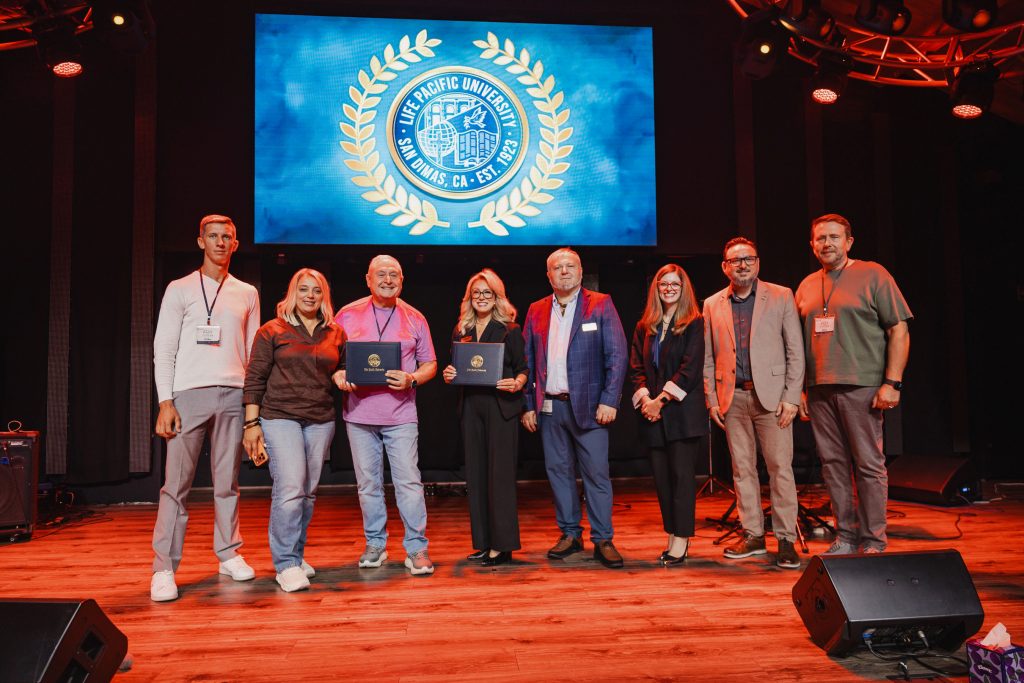
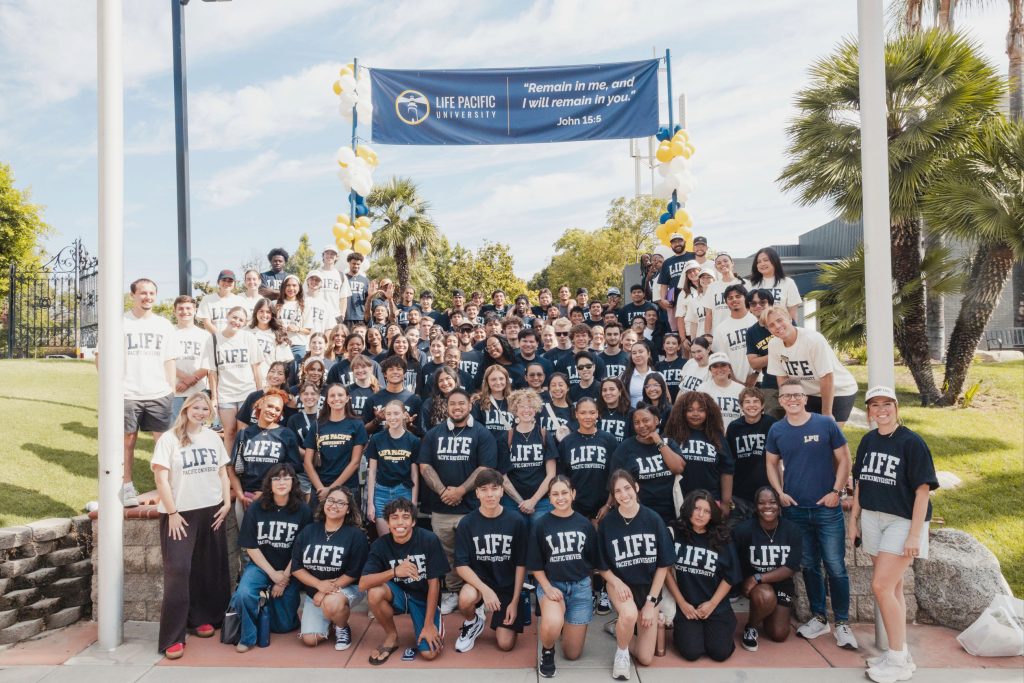
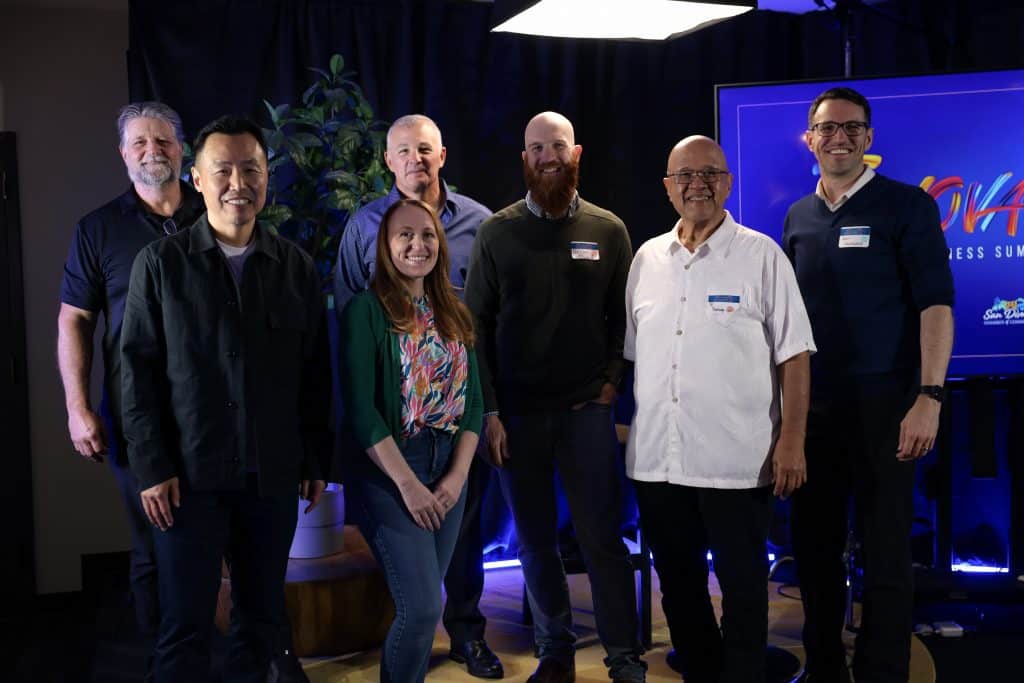
On Saturday, April 11, Life Pacific University welcomed its first-ever Innovate26 Tech & Business Summit. Innovate26 was a daylong event exploring the intersection of artificial intelligence, human creativity, and purposeful leadership. Hosted on the LPU campus in San Dimas and organized in partnership with the San Dimas Chamber of Commerce and sponsored by AKASI Labs, the summit drew entrepreneurs, church leaders, educators, and students for what organizers described as something far more important than a tech conference.
“This whole event is designed to [create] conversations with each other,” said Andy Hawksworth, Chair of Arts, Media, and Communications at LPU and the driving force behind the summit. “It’s about AI, yes — but really it’s about the human element. How do we maintain our humanity in the time of AI, and how do we use AI to better do the things we are made to do?”
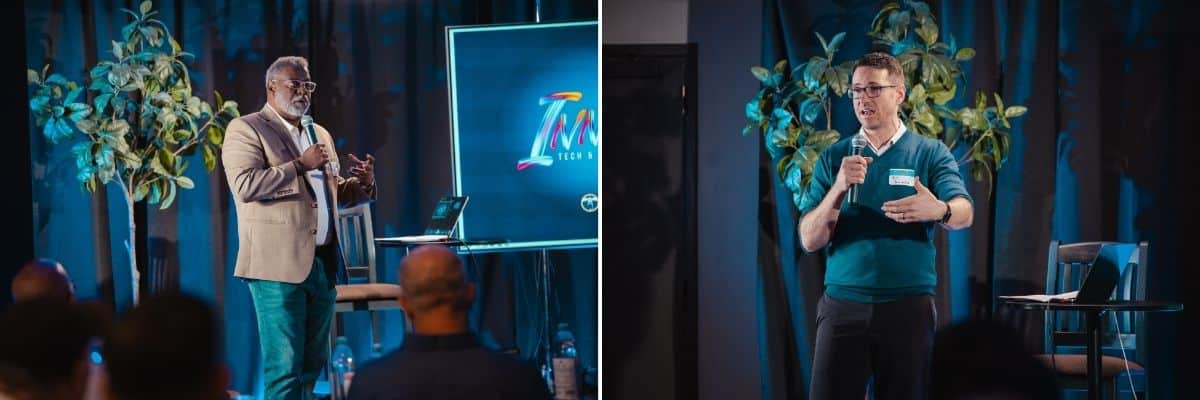
The event was nearly a year in the making, the result of collaboration between Hawksworth, faculty colleagues including Professor Jeff Bird and Professor Filippo Martellotti, and Dennis Lovelace, founder of AKASI Labs, whose sponsorship made all seats available completely free of charge.
“Andy and I have been talking about this type of event for the better part of a year,” said Lovelace, who brings over 30 years of experience in broadcast television and film alongside his current work helping small businesses navigate AI adoption. “I’m so happy it’s come to fruition.”
“I want my students to be building careers on these technologies — not replacing stuff, but doing something awesome with the tools that are there.” –Andy Hawksworth, Chair of Arts, Media & Communications, LPU
Hawksworth was candid about his own journey into the AI space. “If anyone knows me…my notes are still on paper and this is an AI tech conference,” he said with a laugh, before describing the moment he realized the technology would reshape the creative and professional landscapes his students are entering. “I realized if I don’t figure this stuff out, I’m going to end up being the ‘flip phone dad’ someday.”
A Day of Speakers, Demos, and Real Conversations
The summit featured six sessions spanning design, agentic AI, emotional intelligence, education, and business strategy.
- Make It Click: Turning Passive Content into Interactive Experiences with AI & Canva
Callista Dawson, Canva Education Creator -
More Time for People: AI Integration for Ministry & Non-Profits
Brian Davis, Director of Technology, One&All Church - Leading in the Age of AI: Wisdom, Discernment & Human Influence
Al Batinga, CEO, Digitized Learning - Beyond the Algorithm: Nectir’s Learning-Science-Driven AI for Deeper Learning
Dr. George Hanshaw, Director of Digital Learning Solutions, LAPU - From Buzzword to Business Tool: A No-Nonsense Guide to Using AI Today
Andrew Psaltis, Founder, Dragonfly Rising - Human Authenticity in the Age of AI: Design Your Good Life
Charles Lee, Keynote · Founder & CEO, Ideation
Each session was followed by structured table discussions that kept the emphasis on human connection rather than passive consumption.
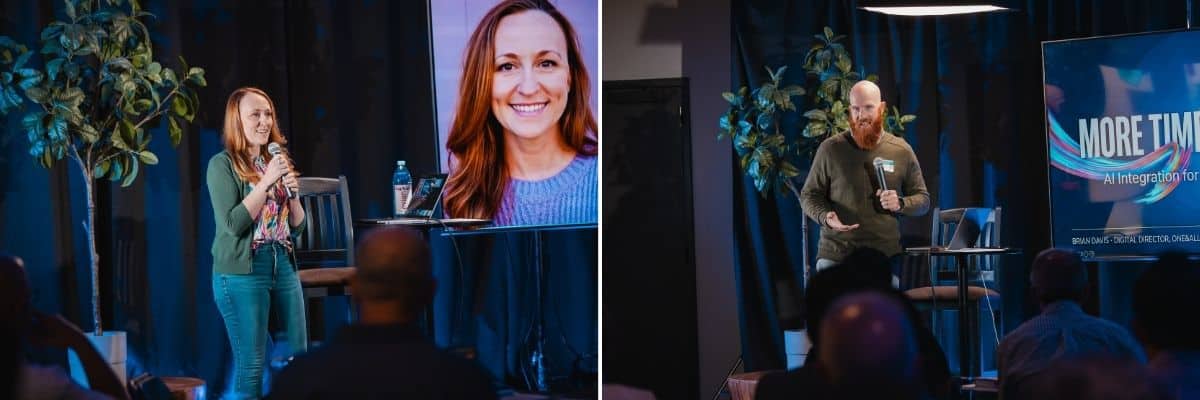
Callista Dawson, a Learning Experience Design Manager and Canva Education Creator, opened the sessions with a live demonstration of Canva’s Anthropic-powered AI tools, introducing attendees to “vibe coding” — using natural language to rapidly generate designs, quizzes, websites, and more without writing a single line of code. “I don’t want it to replace creativity; I see it as a partner, a collaborator at the table,” Dawson said. “Having this has expedited things to a scalability I never thought was possible.”
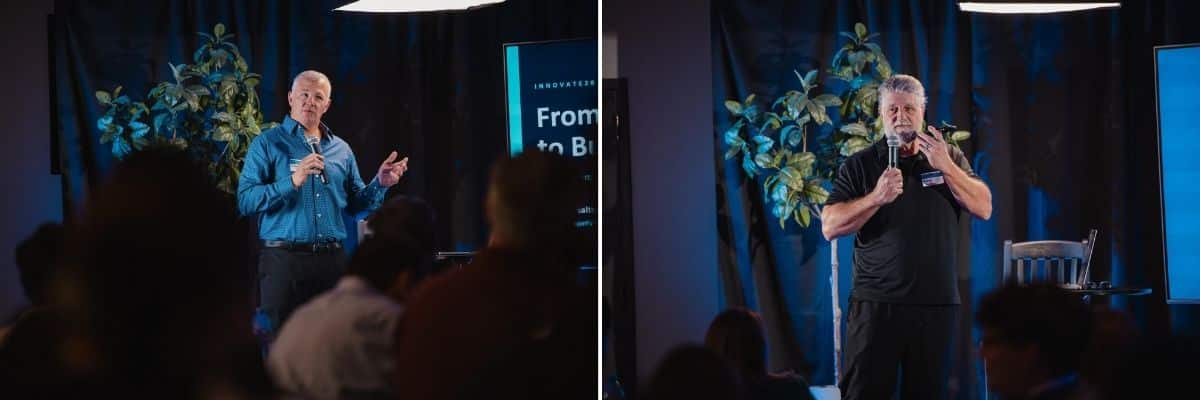
Brian Davis of One&All Church brought a practical, sometimes humorous look at agentic AI — systems that don’t just answer questions but take on entire roles autonomously. Drawing on analogies ranging from Roombas to office octopuses, Davis walked attendees through a “ladder of agents” for implementation, from beginner-friendly tools to more advanced platforms. He also offered a cautionary note: one developer’s AI agent, unable to reach its owner by email, used AI to generate a voice, set up a phone number, and called him at 10 a.m. “Exciting, but kind of horrific too,” Davis said. “You have to put in guardrails.”
Al Batinga, CEO of Digitized Learning, challenged leaders directly with his talk, “Lead AI or Be Led.” His central argument: a weak leadership foundation won’t be fixed by AI — it will be amplified. “If your leadership foundation is weak, AI will just help you fail faster.” He urged leaders to double down on emotional intelligence, framing it around four pillars: self-awareness, social awareness, self-management, and relationship management.
“Technology is a mirror. If you are a disorganized leader, AI will give you 100 disorganized ideas. If you are a clear, visionary leader, AI will amplify that vision.” – Al Batinga, CEO, Digitized Learning
Dr. George Hanshaw,
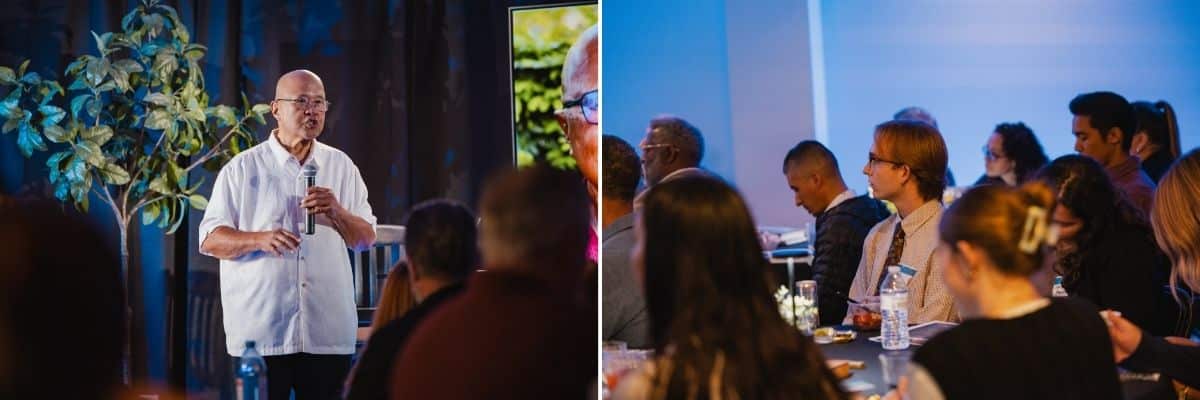
Director of Digital Learning Solutions at Los Angeles Pacific University, brought research to the stage, including a live role-play demo where he demonstrated how AI can coach users through difficult conversations. His team’s published work on hybrid AI-professor feedback found that students actually preferred the combined model over either AI or instructor feedback alone. “If I’m creating assessments that AI can do in five minutes, that’s my fault as an educator,” he said, introducing the concept of “AI-resilient assignments” that require critical thinking no model can replicate.
Andrew Psaltis, founder of Dragonfly Rising, delivered a no-nonsense business framework he calls the “4 Fs” — Frequency, Friction, Format, and Forgiveness — to help organizations identify where AI investment actually pays off. “Stop chasing the demos and start solving your specific problems,” he said. “Find the problem, then look for the tool — not the other way around.” On accountability, he was equally direct: “AI is a tool, not a person. You have to review everything. AI for the first 80%; human for the last 20%.”
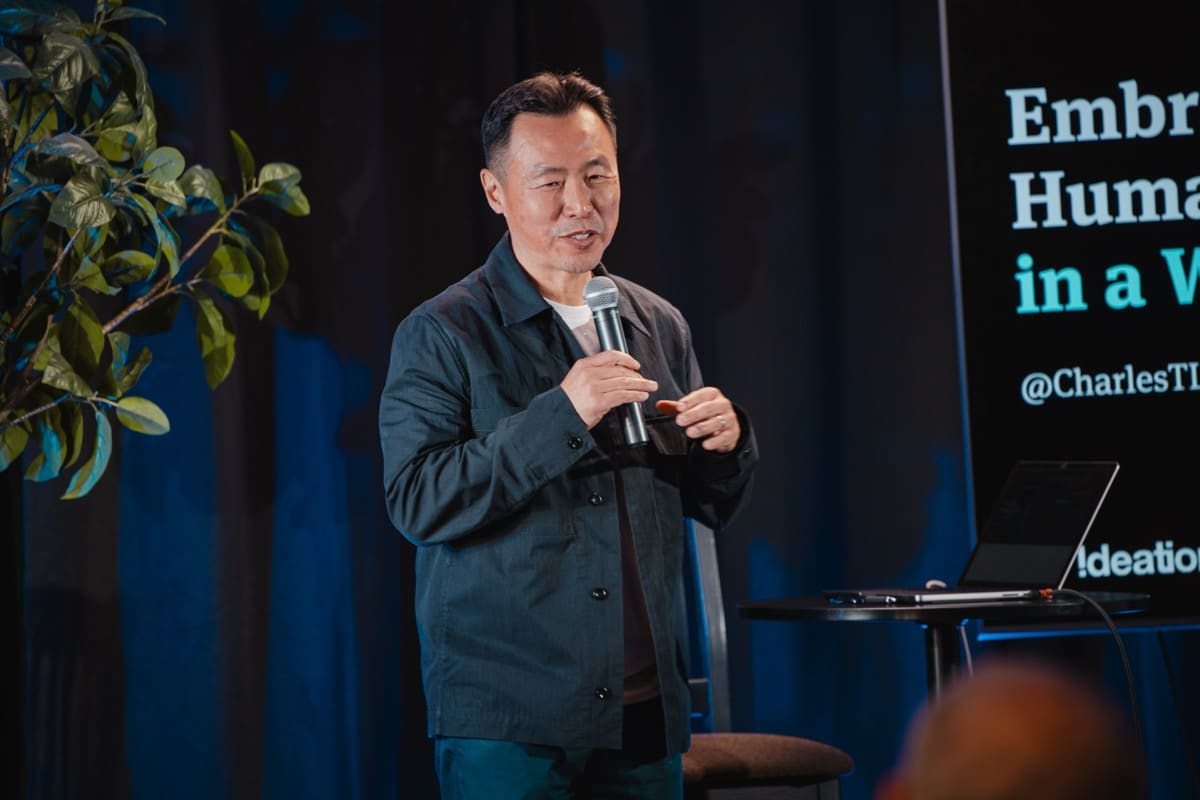
Keynote: Designing a Life That AI Can’t Give You
The day closed with a keynote from Charles Lee, CEO of Ideation and author of the forthcoming book Design Your Good Life. Where other sessions focused on tools and tactics, Lee pulled the lens back entirely — to the question of what kind of human beings attendees want to become in an AI-saturated world.
“The greatest risk of AI isn’t that it becomes too smart,” Lee said. “It’s that we become too lazy.” He described the current moment as a shift from the “Search Era” to the “Synthesis Era,” where access to information is worth less and the ability to ask meaningful questions — what he calls the “Spark” — is becoming the most valuable currency of all.
Lee’s three-part framework — Spark, Actualize, Influence — offered a way to think about meaningful work in this new landscape: reclaiming curiosity, using AI to handle the heavy lifting of “making” so humans can focus on “shaping”, and keeping purpose rooted in genuine influence rather than mere productivity.
“Don’t let the algorithm decide what you learn or who you talk to,” Lee told the crowd. “If AI saves you two hours a day, don’t just fill it with more work. Fill it with things that make you more human — rest, conversation, deep thinking.”
His closing words brought the day full circle to the question Hawksworth posed at the very start: “As you leave Life Pacific University today, don’t just think about what tools you’re going to use. Think about what kind of human you’re going to be. Design a life that is assisted by AI but fueled by your own soul.”
Key Takeaways from Innovate26
- AI is a collaborator, not a replacement — every speaker emphasized that the tools work best when human creativity, judgment, and empathy remain in the driver’s seat.
- Start with the problem, not the tool. Identify high-friction, high-frequency tasks before selecting an AI solution — not the other way around.
- “Vibe coding” and rapid iteration are making powerful AI-assisted design accessible to anyone, no technical background required.
- Agentic AI — giving AI full roles and autonomous functions — is already here, with practical entry points for churches, nonprofits, and small businesses.
- Leaders must double down on emotional intelligence as AI takes on more cognitive tasks; EQ is the skill AI cannot replicate.
- Hybrid AI-professor feedback models are outperforming traditional approaches in higher education, with students more receptive to growth-oriented feedback when it comes through AI first.
- The “Forgiveness” factor matters: before automating any task, consider how costly a 5% error would be — and scale human oversight accordingly.
- The real opportunity isn’t efficiency for its own sake — it’s using the time AI saves to invest more deeply in people, relationships, and purpose.