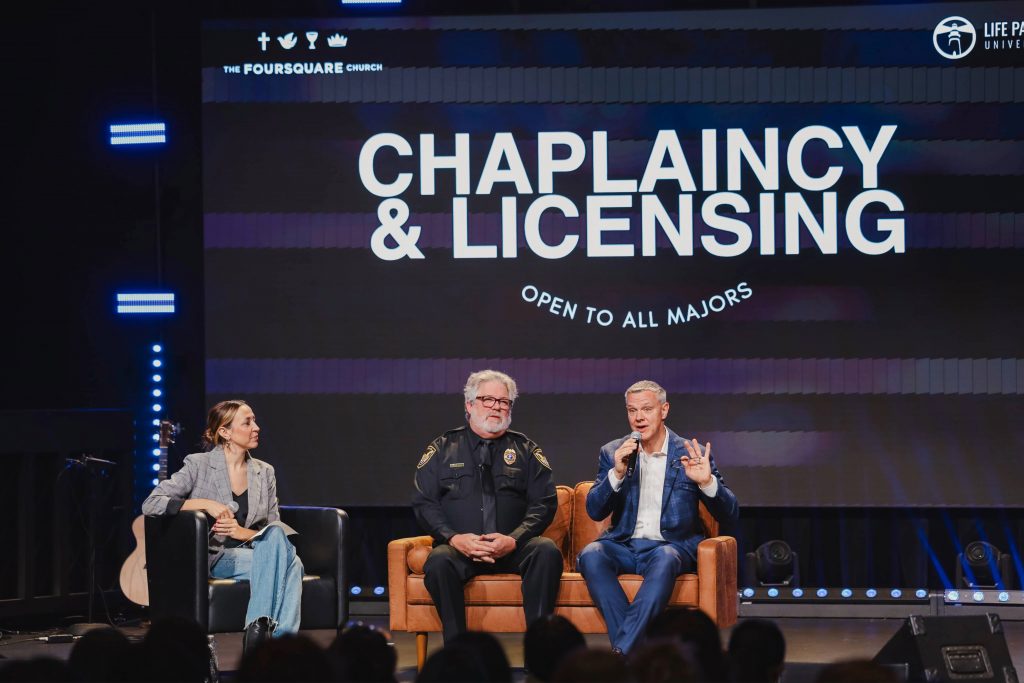
From military service and hospital rooms to law enforcement and disaster response, two experienced chaplains challenged Life Pacific University students to consider how God might be calling them to serve beyond traditional ministry settings.
What does it look like to bring the hope of Christ into some of life’s most difficult moments?
For chaplains, it can mean sitting beside a veteran struggling with trauma, supporting a police officer after a critical incident, comforting a family in a hospital, or simply being present when someone needs to know they are not alone.
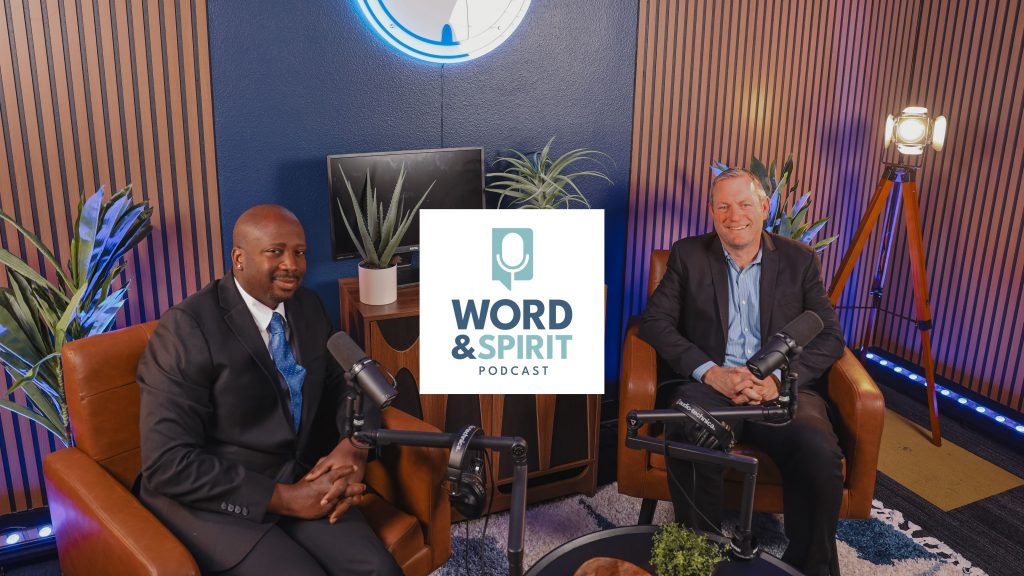
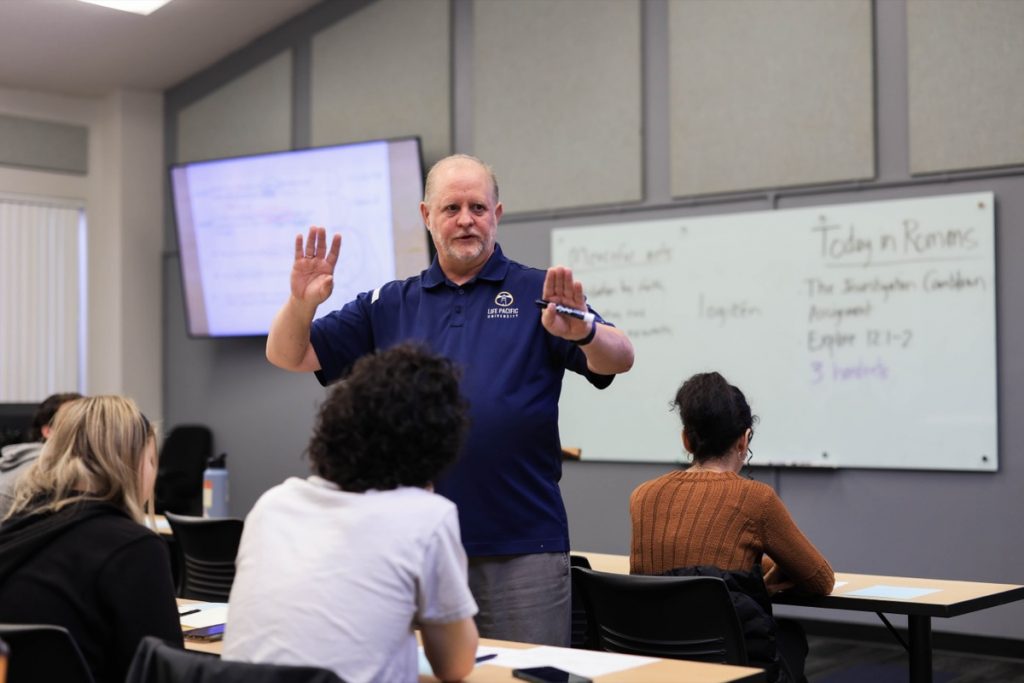
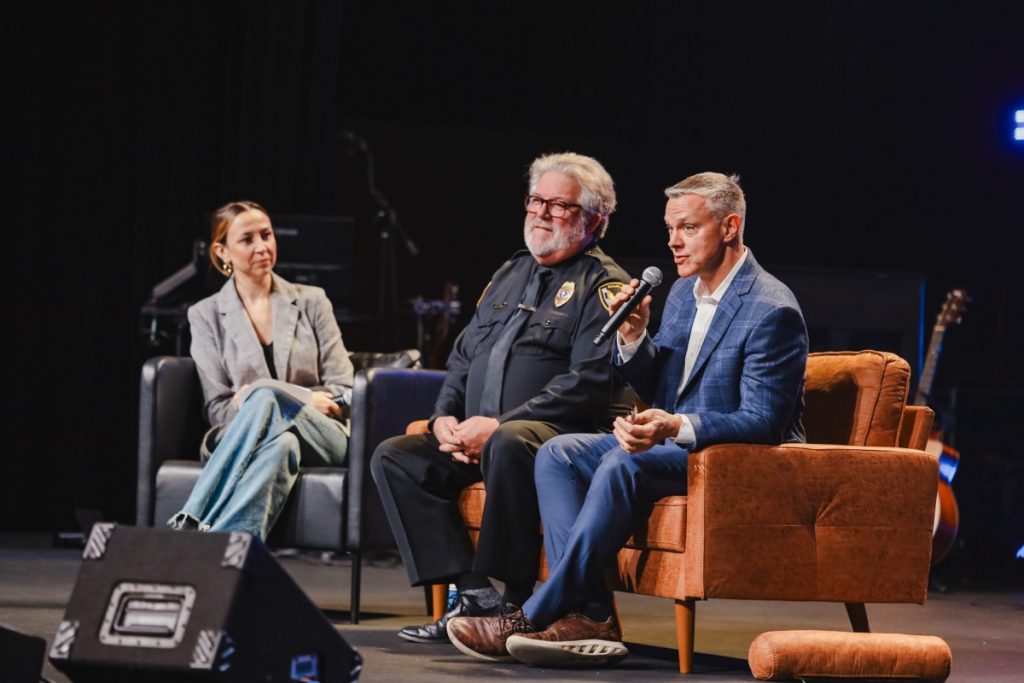
During chapel at Life Pacific University on October 14, students heard from Dr. Ray Houk, a retired Navy chaplain now serving at the Veterans Affairs hospital in Loma Linda, and Tim Brisson, a law enforcement chaplain and Foursquare leader whose ministry focuses on trauma response, mental health, and supporting first responders.
Through personal stories and practical advice, both guests offered a look at a form of ministry that extends far beyond the walls of the local church.
A Calling to Build People
For Dr. Ray Houk, the journey into chaplaincy began while serving as a young Marine in Barstow, California. After coming to faith through a Foursquare church, he began volunteering in the chaplain’s office on his military base and discovered a calling that would shape the next several decades of his life.
“I want to build people,” Houk told students, explaining that while he respected the calling to lead a local church, he felt drawn to ministry that allowed him to serve people directly in their everyday environments.
After attending Life Pacific and earning his Master of Divinity from Fuller Seminary, Houk entered Navy chaplaincy, serving from 1990 until his retirement in 2023. His assignments took him around the world, including deployments aboard Navy ships, work with wounded service members, and a leadership assignment at the Pentagon helping oversee chaplains throughout the Navy.
Today, Houk serves as a mental health chaplain at the VA hospital in Loma Linda, working with veterans experiencing trauma, addiction, and other challenges.
He shared a recent encounter with a Coast Guard veteran who had saved 13 lives as a rescue swimmer but continued to struggle with the weight of those he could not save.
Through their conversation, Houk recognized the deeper wounds behind the veteran’s struggles and began helping him process his experiences.
The story offered students a powerful example of how chaplaincy combines spiritual care, attentive listening, and an understanding of the whole person.
Meeting People in Their Darkest Moments
Tim Brisson’s path into chaplaincy looked very different.
An engineer, attorney, and professional musician, Brisson shared how his own journey through addiction and recovery eventually led him into church, where he discovered faith and a calling to serve others.
After becoming involved in Celebrate Recovery, a mentor encouraged him to consider law enforcement chaplaincy. That suggestion eventually led him to serve with the Sacramento County Sheriff’s Office, accompanying deputies on overnight patrols and supporting officers through traumatic incidents.
Brisson described the importance of building trust with first responders, many of whom are young adults carrying enormous responsibility and regularly witnessing difficult circumstances.
He recalled conversations with deputies returning from long shifts, sometimes questioning whether their work was making a difference.
For Brisson, those quiet moments revealed the heart of chaplaincy. Sometimes the greatest ministry opportunity isn’t delivering a message, but simply being present, listening, and reminding someone that their life and work matter.
Now serving with The Code 9 Project, a nonprofit focused on PTSD and suicide prevention education for first responders and their families, Brisson also helps oversee specialized chaplains within The Foursquare Church.
His work has included responding to wildfires and other disasters, supporting individuals experiencing homelessness, and helping expand chaplaincy into settings such as workplaces, sports organizations, and community nonprofits.
“We bring the hope of the Lord into the darkest situations, and we just sit with them,” Brisson shared.
His message to students was clear: God can use their experiences, education, and personal stories to reach people they may never encounter through traditional church ministry.
More Than One Path Into Ministry
Throughout the conversation, students were encouraged to expand their understanding of what a calling to ministry can look like.
Chaplaincy opportunities exist in the military, hospitals, law enforcement agencies, fire departments, correctional facilities, disaster relief organizations, businesses, and nonprofit ministries.
Some positions are full-time careers requiring graduate education and specialized training. Others involve community-based service, volunteer opportunities, or ministry alongside another profession.
Both guests emphasized that preparation matters. Education, mentorship, professional training, and personal spiritual development all play important roles in preparing chaplains to serve effectively.
Houk particularly encouraged students to seek out mentors and learn from professionals already serving in fields they hope to enter.
“Preparation comes by saying yes step by step and mentorship,” he shared.
Their conversation also highlighted how chaplaincy can connect with several areas of study at LPU, including psychology, biblical theology, ministry, leadership, and counseling.
For students who feel called to care for others but are unsure what that calling might look like professionally, chaplaincy presents an opportunity to bring faith and service together in meaningful ways.
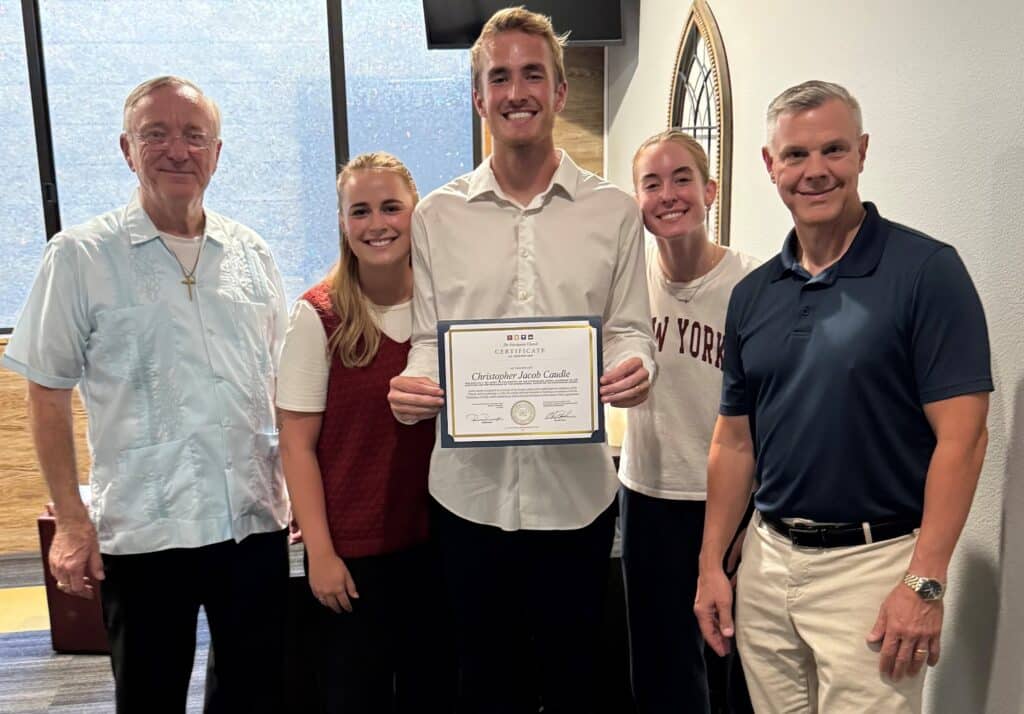
LPU Graduate, CJ Caudle with Foursquare Chaplains
Preparing the Next Generation of Chaplains at LPU
Life Pacific University is committed to preparing students and ministry leaders to serve God in the Church, the workplace, and the world. During chapel, students learned about three opportunities available through LPU to help them pursue ministry and chaplaincy.
Certificate in Chaplaincy
LPU’s Certificate in Chaplaincy offers an accessible introduction to chaplaincy through four self-paced online courses:
- Introduction to Chaplaincy
- Ethics and Legal Matters
- Crisis Intervention Skills
- Spiritual and Mental Health
The $340 certificate program is designed for ministry leaders and individuals interested in providing spiritual and compassionate care in diverse settings.
It also fulfills a training requirement for endorsement through Foursquare Chaplains International (FCI), helping participants take an important step toward professional or volunteer chaplaincy.
Explore LPU’s Certificate in Chaplaincy
Foursquare Pastoral Licensing
Students interested in pastoral ministry or chaplaincy can also pursue preparation for ministerial licensing through LPU’s Foursquare Culture & Doctrine course.
This 16-week, cohort-based course provides teaching, mentorship, and coaching to prepare participants for the Foursquare licensing process, including the licensing interview.
During chapel, Brisson emphasized the importance of proper preparation and coaching, encouraging students to take advantage of the resources available through LPU.
Eligible current LPU students also receive a 50% discount on their Foursquare licensing application fee and first-year credential fee.
Learn About the Foursquare Licensing Pathway
Master of Divinity
For students pursuing advanced ministry preparation, particularly those interested in military, federal, and many hospital chaplaincy roles, LPU offers an online Master of Divinity (MDiv).
The 72-unit graduate program equips students with advanced theological education, pastoral care skills, spiritual formation, and practical ministry preparation.
Through LPU’s partnership with Foursquare Chaplains International, eligible FCI-endorsed or approved chaplains may qualify for a 50% tuition scholarship toward the Master of Divinity.
The partnership reflects LPU’s commitment to making advanced ministry education more accessible and equipping chaplains to serve communities with excellence.
Explore LPU’s Master of Divinity Program
Your Calling May Take You Somewhere Unexpected
As chapel concluded, students were challenged to consider where their gifts, experiences, and willingness to serve might lead them.
For Houk, that calling took him from a Marine base to Navy ships, the Pentagon, and eventually the bedside of veterans in need of spiritual care.
For Brisson, it led from a career in engineering and law through personal recovery and into a ministry supporting first responders and people experiencing some of life’s hardest moments.
Neither path looked exactly as they had imagined. Both demonstrated how God can use a willing heart in unexpected places.
Whether serving in a church, hospital, military installation, police department, or local community, chaplaincy offers opportunities to make a lasting difference through compassionate, Christ-centered care.
Could chaplaincy be part of your calling?
Life Pacific University offers educational pathways to help students and ministry leaders explore that possibility, develop essential skills, and prepare to serve wherever God leads.
Explore the Certificate in Chaplaincy | Discover the Master of Divinity | Learn About Foursquare Licensing